Paulownia wood farming in India is gaining popularity due to its fast growth, lightweight hardwood, and high commercial value. Farmers prefer Paulownia for its quick returns, low maintenance, and suitability for agroforestry. With hybrid varieties, high timber demand, and profitable yields, Paulownia is becoming one of India’s most promising timber crops.
The trees of Kashmir are an important part of the Himalayan ecosystem and natural beauty of the valley. Kashmir is rich in a wide variety of coniferous, deciduous, fruit, medicinal, and timber trees due to its fertile soil, diverse climate, and high-altitude environment. Famous forest trees such as deodar, pine, fir, poplar, empress, willow, andwalnutplay a vital role in maintaining ecological balance, preventing soil erosion, and supporting wildlife.
Kashmir is also well-known for its fruit-bearing trees, especially apple, black walnut, pistachios, hazel, pecan, elderberry, cherry, pear, gojiberry, almond, apricot, Kiwi, chestnut and walnut, which form the backbone of the region’s horticulture economy. Along with this, many medicinal and herbal trees found in Kashmir are used in traditional healing systems like Ayurveda and Unani. These trees provide oxygen, improve air quality, support biodiversity, and offer livelihood opportunities through timber, fruits, and herbal products.
The forests of Kashmir are not only vital for the environment but also enhance tourism, climate regulation, and sustainable livelihoods. Protecting and conserving the trees of Kashmir is essential for fighting climate change, preserving natural beauty, and securing the future of coming generations.
“Gucchi mushrooms appear on fine-dining menus worldwide in dishes such as Gucchi pulao, risotto, stuffed morels, creamy morel pasta, and truffle-infused morel soups—considered among the most luxurious mushroom dishes globally.”
Guchi mushrooms, also known as morel mushrooms, are one of the rarest and most expensive wild mushrooms in the world. Found naturally in the Himalayas, Kashmir forests, Himachal, Uttarakhand, and high-altitude cedar woodlands, these mushrooms cannot be farmed and are collected by hand after snowfall melts in spring.
Guchi mushrooms are easily recognized by their honeycomb-like appearance, spongy texture, and earthy aroma. They are prized in gourmet cooking for their rich umami taste, smoky flavor, and ability to absorb spices and sauces. Because of their rarity and labor-intensive collection process, guchi mushrooms often cost more than saffron by weight, making them a luxury ingredient in fine dining.
Traditionally used in Kashmiri cuisine, guchi is now featured internationally in risottos, soups, pastas, gourmet gravies, pulao, and truffle-infused culinary creations. Packed with antioxidants, natural vitamin D, and protein, guchi mushrooms are valued not only for their taste but also for their medicinal and nutritional benefits.
Ginkgo biloba, also known as the “Maidenhair tree”, is one of the oldest living tree species and a highly valued medicinal plant worldwide. Its leaves, seeds, and extracts have huge commercial demand in the pharmaceutical, nutraceutical, and cosmetic industries.
High Demand in Herbal Medicine Ginkgo leaf extract is widely used for memory enhancement, brain health, improved blood circulation, and antioxidant benefits.
Global Export Opportunity Dried leaves and extract powders sell at premium prices in Europe, China, Japan, and the US. Low Maintenance Ginkgo trees are disease-resistant, drought-tolerant, and suitable for organic cultivation. Long-Term Income Leaves can be harvested annually after year 4–5. Timber becomes valuable after 20–25 years. High Market Price Dried leaves: ₹250–₹600 per kg (quality-based) Ginkgo extract: Very high wholesale value Saplings/nursery: Also highly profitable Ginkgo Biloba Tree Farming Description Ginkgo biloba is a slow-growing, hardy deciduous tree native to China. It thrives in temperate climates such as Himalayan regions, Kashmir, Himachal Pradesh, Uttarakhand, and cool parts of India. Ideal Growing Conditions Climate: Temperate, 0°C to 30°C Altitude: 800–2,500 meters Soil: Well-drained loam or sandy loam pH: 5.5–7.5 Water: Moderate irrigation first 3 years Spacing: 10 ft × 10 ft or 12 ft × 12 ft Planting Season: Spring (Feb–April) or Autumn (Sept–Nov) Yield & Profit Estimate (Per Acre) Leaf Harvest Starts from year 4–5 Average annual leaf yield: 2000-3,500 kg/acre Selling price: ₹1500–₹2000/kg Annual income: ₹4,00,000 to ₹9,00,000 per acre Timber Value Mature trees (20–25 years old) yield premium-quality wood used in: furniture carvings temple artefacts luxury products Can fetch ₹10 lakh+ per acre depending on tree size and market rates. Nursery Business Opportunity Ginkgo saplings sell for ₹550–₹1000 each A 1-acre nursery can produce 20,000–30,000 saplings, generating strong yearly income.
Availability : Planting material WhatsApp : 9858986794 e-mail : jkmpic@gmail.com
Cultivation and management of trees, including fruit orchards, timber production, and agroforestry. Profitability depends on climate, soil type, and market demand.
Eucalyptus: Excellent for pulpwood, poles, and biofuel. Poplar: Grows fast, good for plywood and paper industries.
Medicinal and Aromatic Trees
Ginkgo biloba: Extremely profitable but long-term (15–20 years). Agarwood (Aquilaria spp.): High market value for perfumes and incense. Neem (Azadirachta indica): Used in medicine, bio-pesticides, and cosmetics.
Fruit & Nut Trees (Agroforestry Model) Almond, Walnut, Hazel and Pecan: Long-term investment, high value. Amla, Guava, and Moringa: Quick returns and medicinal benefits.
Business Models Timber Production: Focus on long-term hardwood and softwood sales. Agroforestry: Combine tree crops with food crops or livestock for quicker income. Nursery & Seed Production: Sell saplings, seeds, and cuttings to other farmers. Eco-Tourism / Carbon Credits: Monetize forest conservation and carbon
Approximate ROI (Return on Investment) examples (per acre):
Tree TypeHarvest TimePotential Income (₹/acre)
Paulownia5–7 years ₹20–25 lakh
Poplar6–8 years₹8–12 lakh
Eucalyptus5–6 years ₹6–10 lakh
Sandalwood15–20 years₹50 lakh+
Agarwood8–10 years₹30–40 lakh
(Income varies based on density, market price, and management.)
Tree farmers
can potentially earn up to $40,000 per acre by harvesting biomass Paulownia
Empress trees every 10 years.
With its unparalleled
growth rate and biomass output, Paulownia presents a sustainable solution for
renewable energy production. Its cultivation helps reduce reliance on fossil
fuels and contributes to climate change mitigation. The biomass produced from
Paulownia Empress trees can be utilized for bioenergy, biofuels, and various
bioproducts, making it an environmentally friendly and economically viable
option for both industry and the planet.
Asafoetida-Ferula asafetida-Heeng
is a spice that is an integral part of the Indian cuisine. It is a natural
medicine and a go-to home remedy for digestion-related problems. A recent
project by the JKMPIC has given Kashmir a chance to taste the spice cultivated
in its own land. The JKMPIC has planted 5000 saplings of ferula asafoetida in 2019.
Angelica archangelica is an herb that grows up to 250 cm tall. The root, seed, leaf, and fruit have been used historically in Nordic folk medicine. Angelica archangelica contains chemicals that mightkill cancer cells and fungus, reduce anxiety, and settle the stomach.
Saw palmetto is a hardy and low-maintenance plant that is perfect for adding a tropical touch to your garden or landscape. With proper planting, watering, fertilizing, and pruning, your Saw palmetto plant can thrive for years to come. If you're looking for a low-maintenance plant that can tolerate drought and salty soils, saw palmetto is definitely worth considering.
Kashmiri chili is a good source of various antioxidants which control and convert the active free radicals in the blood. Therefore, including this spice in the daily diet can meet your body's requirement for antioxidants resulting in anti-aging and optimal health.
Asafoetida is a plant native to the deserts of Iran, Kashmir, Tajkistan, Chinese contolled kashmir (Aksai Chin), and mountains of Afghanistan. It has a strong sulfurous smell and a bitter taste. It is usually available as a coarse yellow powder.
Devil's dung is another name for asafoetida, a substance derived from the dried latex of the roots of Ferula species. Asafoetida is also known as stinking gum, asant, food of the gods, hing, and giant fennel.
Asafoetida is traditionally used for the treatment of different diseases, such as whooping cough, asthma, ulcer, epilepsy, stomachache, flatulence, bronchitis, prostate troubles,intestinal parasites, antispasmodic, weak digestion and influenza.
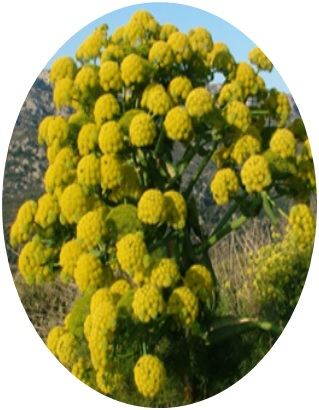
Ferula communis,
also known as giant fennel, is a flowering plant in
the carrot family. It's related to the common fennel
(Foeniculum vulgare).
Ferula communis is
a tall, herbaceous perennial plant that can grow up to 4.5 meters (15 feet)
tall. It's drought-tolerant and prefers full sun. It has dense roots
and a cylindrical peduncle that's green, striated, and has slimy exudate.
Ferula communis
has yellow flowers. It's native to the Mediterranean region. Its
stems grow to about 3 meters (10 feet) high and are used for tinder.
Ferula communis
has various pharmaceutical properties due to the different contents of
bioactive compounds extracted mainly from its roots, as well as its leaves and
rhizome.
It’s native to Turkmenistan, Iran, Afghanistan,
Pakistan, Uzbekistan, Kashmir,Tajikistan, China and Kazakhstan and is a bit smaller
than some other species. It only grows to about three feet tall.
Ferula grows best in a cold, arid, sunny climate. While it’s a
fussy plant, in the right climate, it will hunker down and stubbornly grow (and
spread) without any interference from us.
But when the weather takes a turn that these plants don’t like,
they go dormant. That’s why they grow so slowly.
It’s an ongoing cycle of dormancy, resurgence, dormancy, and
resurgence. But if you can manage the environment as best you can, you can
speed things up.
Asafetida
needs full sun, but it doesn’t like heat. Don’t be tempted to grow it in
partial shade to keep it cool. It actually needs full sun.
In the wild, you’ll find most species growing in sandy or loamy
soil in full sun.
The quickest way to get rid of asafetida is to
plant it somewhere with heavy, poorly-draining soil. Your soil should have a pH
around 6.5 to 7.5.
Remember, your ferula won’t die, it will just
go dormant in adverse conditions. That means it will stop growing, or it might
even die back temporarily. The more often the plant goes dormant, the longer it
takes to mature.
The Jammu and Kashmir Medicinal Plants Introduction Centre -JKMPIC, is a pioneer institution in pvt. sector to start cultivation of important indigenous medicinal plants and introduce many from other parts of the world. A preliminary study on cultivation of medicinal plants in Jammu and Kashmir was from this institution.
For more details please mail us at : jkmpic@gmail.com WhatsApp: +91-9858986794
The Ginkgo plantation was started during the year 2001-2004. The main thrust of the programme was to develop Ginkgo plantation of improved cultivars.
Cultivars/Varieties 'Autumn Gold' (perhaps Autumn Gold™) - This male (non-fruiting) selection is common in the trade and notable for its symmetrical crown that is broad and rounded. The mature size is 50' tall with a 30' spread and fall color is an excellent deep yellow.
'Jade Butterfly' - An unusual dwarf, slow-growing form, thisplant has bright green leaves and a mature height that is less than half that of standard forms. It's an introduction out of New Zealand that is gaining popularity.
'Magyar' - An introduction that is gaining momentum in the trade, this plant is a non-fruiting male with upright, ascending branching to 60' tall and half as wide. It is well-suited to urban planting as a street tree.
'Pendula' (also listed as f. pendula) - Plants listed under this name are quite variable, with few expressing a strong weeping habit. Most bear branches that are horizontal or droop slightly 'PNI 2720' (Princeton Sentry®) - A very popular non-fruiting male form, this form assumes an upright habit that tapers to the point. It reaches 60' tall, but only 25' wide.
'Saratoga' - Commonly offered, this plant has a strong central leader and an upright, narrow habit (40' tall and 30' tall).
'Variegata' - Many different clones are offered under this name, but most feature leaves that are irregularly streaked with yellow.
Availability : Ginkgo leaf/tea/seed/planting material
Liquorice, or licorice, is the root of Glycyrrhiza glabra from which a sweet flavour can be extracted.
The liquorice plant is a herbaceous perennial legume native to southern Europe and parts of Asia, such as Kashmir.
Min packet of 50 seeds
More details: jkmpic@gmail.com
Ph: 09858986794/01933-223705
Mentha spicata-Spearmint tea can help regulate hormone levels. A study conducted by Turkish researchers indicates that spearmint tea can help women with hirsutism. The study subjects were given herbal spearmint tea twice a day for five days in the follicular phase of their menstrual cycles. The follicular phase begins on the first day of the cycle and lasts about 14 days.
Availaiblty : Seed/roots/plant for R&D purpose only
diaphoretic and purgative. They
have proved useful in the treatment of rheumatism, Hair growth and syphilis.
The bark is febrifuge.
Other uses of Buxuswallichiana: Plants can be grown as a hedge, they are very tolerant of pruning
but are slow growing. Wood - hard, fine grained, durable. Used for engraving,
fine carving, mathematical instruments etc. It is at least equal in quality to
B. sempervirens.